As I mentioned in my introduction post, I’ve come to realize the importance of sustainable practices, not just in business but also in my personal life. Before exploring broader categories, I want to start with the most important step: looking at my own choices. This post will focus on why sustainability matters to me personally and how I’m planning to adopt more sustainable solutions in my everyday life.
Sustainability is the practice of meeting the needs of the present without compromising the ability of future generations to meet their own needs. (Brundtland, 1987)
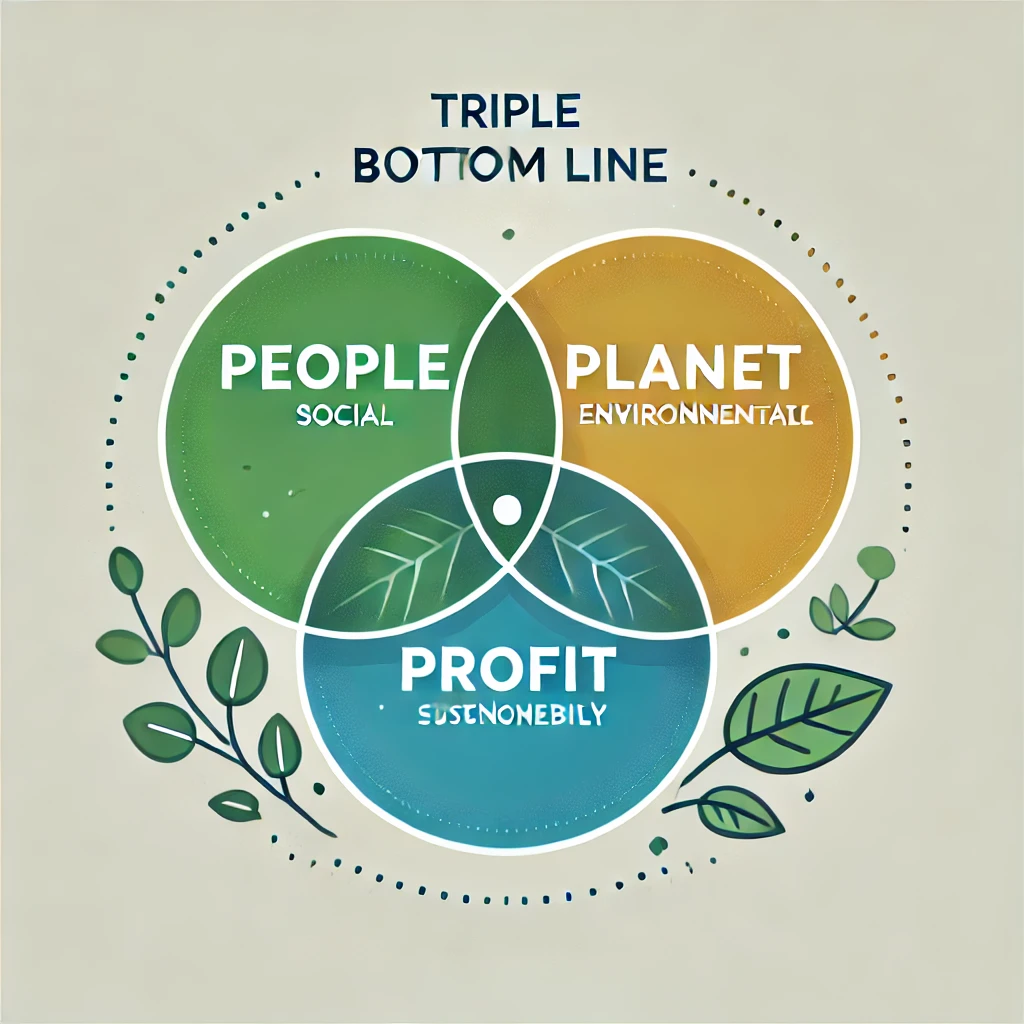
In business, there’s a concept called the Triple Bottom Line, which emphasizes that businesses should not only focus on profits but also balance environmental protection and social well-being. I first learned about this concept while studying logistics in the fall of 2024, so it’s a relatively new idea for me. Still, learning about the importance of sustainability has set a process in motion for me. As mentioned, I will go more in depth on different topics in this blog, but it’s equally important to adopt sustainable practices in my personal life. If I want to contribute to sustainable supply chains or investments, I must embody this mentality in my own choices and actions.
Is money or career the driving force behind my interest in sustainability? Absolutely not! My primary goal is to live a balanced, sustainable life – not just financially, but also environmentally and socially. Even if I don’t end up working directly with supply chains, I want my personal choices to reflect the sustainability principles I stand for.
My Own Triple Bottom Line
I’ve defined my goal: to create a personal triple bottom line for my own life. I want to become more mindful of my choices and share them with you through this blog.
It’s very easy to blame big companies, other cultures, and governments for climate change, poverty, and injustice. As one person, it’s natural to feel small, as if your actions don’t matter at all. What difference does it make if you choose sustainability, when the rest of your community, country, or the world doesn’t seem to care? So many words, but no action. “It’s the government’s responsibility!”
But no, this is a responsibility we all share – every single one of us who calls this planet home. Our shared goal should be to leave the world in the same – or preferably better – condition than when we first arrived. By daring to use your voice or sharing positive experiences, you can inspire and influence others to do the same.
Of course, governments have a huge responsibility. They must lay the foundation and make it easier for people to make sustainable choices. (Companies do too, but for now, I’ll focus on personal sustainable practices.)
What Is My Next Step?
I want to work through this process thoughtfully, building a solid foundation. I want my efforts to be genuine and honest so that I can lead by example.
My goal is to keep these posts engaging and easy to follow.
For this series on personal sustainable practices, here are the steps I plan to take:
- Assessing where I am: How am I contributing to a sustainable world?
- Understanding what the world needs: Global and national goals.
- Finding my role: How can I help the world meet its goals?
- Setting and implementing new goals.
- Evaluating and sharing the results over time.
Do you have any goals for living more sustainably or tips you’d like to share? Please feel free to comment!
Until next time, let’s keep striving for a better and more sustainable world!
Mr.Hetland
References :
Brundtland, G. H. (1987). Our common future: Report of the World Commission on Environment and Development. Oxford University Press.